
Acolyte Living
AboutPropertiesUniversityContact Us
Acolyte Living
Acolyte Living

Powered by BharatPahchan

Trustpilot

TrustScore 4.2

Acolyte Living

Powered by BharatPahchan

Trustpilot
TrustScore 4.2
United KingdomUnited StatesGermanyAustralia
UniversityVerified ReviewsScholarshipBlogsPopular Stays
About UsPartner With UsList With UsFAQs
Contact UsTerms & ConditionsPrivacy PolicyRefund Policy
support@acolyteliving.comWhatsApp+91 80585 12544+44 113 403 8148

Follow us on:

InstagramYouTubeLinkedInFacebook

© 2026 ACOLYTE LIVING PRIVATE LIMITED. All rights reserved.

SSL Secured
Data Protected
Acolyte Living
AboutPropertiesUniversityContact Us
Acolyte Living
Acolyte Living

Powered by BharatPahchan

Trustpilot

TrustScore 4.2

Acolyte Living

Powered by BharatPahchan

Trustpilot
TrustScore 4.2
United KingdomUnited StatesGermanyAustralia
UniversityVerified ReviewsScholarshipBlogsPopular Stays
About UsPartner With UsList With UsFAQs
Contact UsTerms & ConditionsPrivacy PolicyRefund Policy
support@acolyteliving.comWhatsApp+91 80585 12544+44 113 403 8148

Follow us on:

InstagramYouTubeLinkedInFacebook

© 2026 ACOLYTE LIVING PRIVATE LIMITED. All rights reserved.

SSL Secured
Data Protected
University of Toronto
VERIFIED HOUSING

UNIVERSITY

Student Accommodation near University of Toronto | Acolyte Living

Find the best student accommodation near University of Toronto. Explore top areas, rental costs, and off-campus housing options for U of T students. Book today!

University of Toronto
Campus Main

Campus

Campus Main

ACOLYTE COMMUNITY

1500+ Students Housed

NO BROKER FEES·
VERIFIED UNIVERSITY OF TORONTO LISTINGS·
FULLY FURNISHED · BILLS INCLUDED·
£50 PER REFERRAL·
INSTANT SUPPORT·
NO BROKER FEES·
VERIFIED UNIVERSITY OF TORONTO LISTINGS·
FULLY FURNISHED · BILLS INCLUDED·
£50 PER REFERRAL·
INSTANT SUPPORT·

The Cribs

Verified student homes near University of Toronto.

🎓
University of Toronto
0/0 shown
Price / week
< £200
£200–£280
> £280

The Lore

Eat & DrinkStudySocial

Banh Mi Boys

7 min

A popular Spadina Avenue eatery known for its Vietnamese banh mi sandwiches, bao, and fusion street food at student-friendly prices.

Kensington Market

10 min

Toronto's famous multicultural food district, offering everything from Jamaican patties and ramen to empanadas and Ethiopian cuisine, making it a favourite among U of T students.

Side Quests

EARN CASH FOR REFERRALS

Refer and earn

Tell a friend — and earn real cash — paid straight to your bank

Refer Now →
ACOLYTE SCHOLARSHIP 2026

£500 scholarship.
50 winners. Every year.

We created the Acolyte Scholarship to give international students — including University of Toronto students — a meaningful head start on the biggest financial challenge of studying abroad: the cost of housing.

  • ✓Open to all nationalities — no restrictions
  • ✓No GPA or grade requirement
  • ✓Must be studying internationally
  • ✓500-word essay — your story, in your words
  • ✓£500 paid directly to your bank account

Student FAQs

The Annex is widely considered the best neighbourhood for U of T students at the St. George campus, offering a five-minute walk to campus, a vibrant student atmosphere, multiple TTC subway stations, and a concentration of bookshops, cafes, and student-friendly housing. Harbord Village is a quieter alternative within the same distance of campus. Kensington Market is ideal for students who prefer an eclectic, multicultural environment at slightly lower rents.

Shared rooms in private apartments and houses near the St. George campus typically range from CAD 750 to 1,400 per person per month depending on the neighbourhood. The Annex and Harbord Village are at the higher end of that range, while Chinatown and Little Italy offer lower options. One-bedroom apartments near campus average CAD 2,200 to 2,800 per month. Students moving further from campus to North York or Scarborough can find shared rooms from CAD 600 to 900 per month.

Yes. The University of Toronto guarantees on-campus housing for all new full-time undergraduate students entering their first year of university for the first time, provided they complete the common residence application by March 31 and accept their offer of admission by June 2. On-campus residences at all three campuses are available.

U of T students are exceptionally well served by transit. The TTC subway has stations directly on and adjacent to the St. George campus, including the St. George station at the intersection of Lines 1 and 2. Discounted PRESTO cards and TTC monthly passes are available for students. Streetcars, buses, GO Transit regional rail, and a growing cycling network complete Toronto's comprehensive student transit picture.

The University of Toronto has three campuses. The St. George Campus is the main campus in downtown Toronto. The U of T Mississauga Campus is located 35 kilometres west of downtown along the Credit River. The U of T Scarborough Campus is in eastern Toronto approximately 22 kilometres from the St. George campus. An intercampus shuttle connects all three.

University of Toronto

The University of Toronto, widely known as U of T or UofT, is Canada's largest and most prestigious university and one of the leading research institutions in the world. Founded in 1827 as King's College, the first institution of higher learning in Upper Canada, it was renamed the University of Toronto in 1850 and has since grown into a global powerhouse with a reputation that places it firmly in the top 30 universities on earth across every major ranking system. With total enrolment surpassing 100,000 students across its three campuses for the first time in 2024, U of T is home to one of the most diverse academic communities anywhere in North America. International students from 135 countries make up nearly 29 percent of the student body, reflecting the university's global reach and inclusive culture. The university offers over 700 undergraduate programmes and more than 200 graduate programmes spanning medicine, law, engineering, business, humanities, sciences, music, architecture, and the arts, supported by a research budget that is the largest of any university in Canada. Toronto itself is Canada's largest city and one of the most multicultural, economically dynamic, and culturally vibrant cities in the world. It is consistently ranked among the most liveable cities globally and in 2024 was recognised by CBRE as one of North America's top five emerging tech markets. For students preparing to study at U of T, finding the right accommodation near University of Toronto is one of the most important decisions they will make. Acolyte Living is here to help guide every step of that process with confidence and clarity.
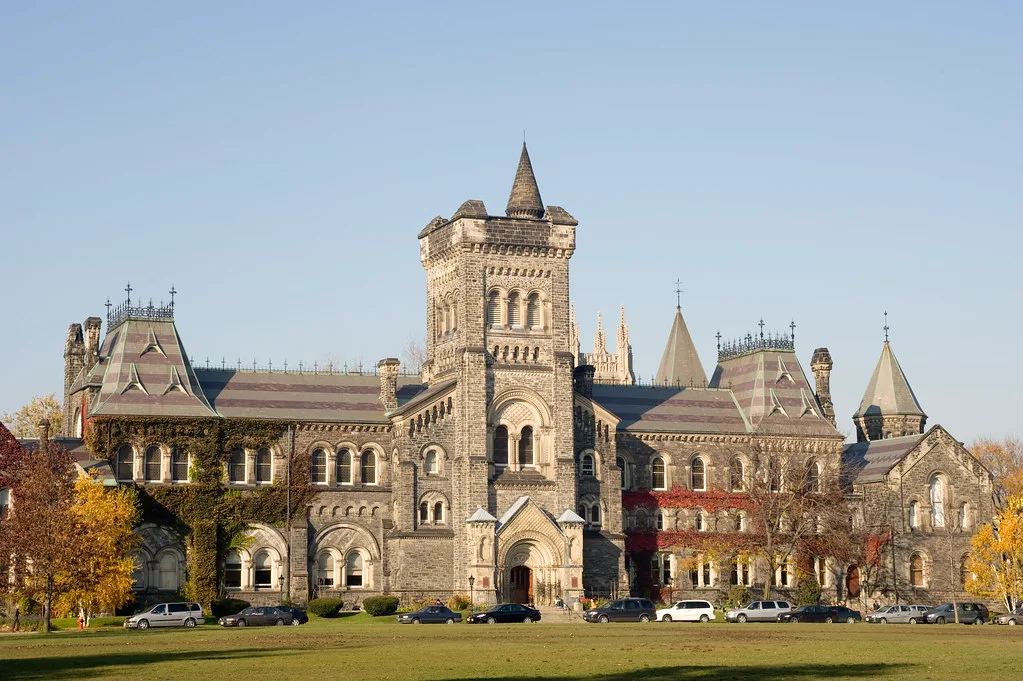
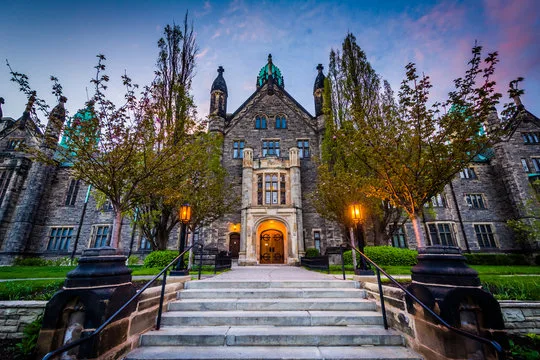
The University of Toronto operates across three distinct campuses in the Greater Toronto Area, each with its own character, community, and academic focus. The St. George Campus is the main and oldest campus, located in downtown Toronto at 27 King's College Circle, adjacent to Queen's Park and surrounded by some of the city's most celebrated cultural institutions. The campus covers a compact but architecturally stunning footprint in the heart of one of North America's greatest cities, blending Norman Romanesque and Gothic Revival heritage buildings from the 19th century alongside award-winning contemporary structures such as the Leslie L. Dan Pharmacy Building and the Goldring Centre for High Performance Sport. St. George is home to five direct-entry undergraduate faculties, the Faculty of Arts and Science's celebrated collegiate system, and the university's graduate and professional schools including the Temerty Faculty of Medicine, the Rotman School of Management, and Osgoode-adjacent law programmes. Its 14 student residences house thousands of students within an easy walk of lectures and world-class cultural venues including the Royal Ontario Museum, which stands directly on the campus perimeter, and the Art Gallery of Ontario nearby. The U of T Mississauga Campus is located approximately 35 kilometres west of downtown Toronto along the banks of the Credit River. Set within 225 acres of parkland, the campus has its own Faculty of Arts and Science, the Hazel McCallion Academic Learning Centre, and a range of undergraduate programmes in business, science, humanities, and interdisciplinary studies. It has a more self-contained, campus-town feel compared to St. George. The U of T Scarborough Campus is located in the eastern part of Toronto at 1265 Military Trail, approximately 22 kilometres from the St. George campus. It is home to the Department of Computer and Mathematical Sciences, strong co-operative education programmes, a new aquatics centre, and a residential community built into a scenic ravine setting.
The University of Toronto consistently holds its position as the number one university in Canada and one of the top universities in the world across every major global ranking system. In the QS World University Rankings 2026, U of T is ranked 29th globally and first in Canada. In the Times Higher Education World University Rankings 2026, it holds 21st place globally and first in Canada, with a particularly strong 16th-place finish in the research environment pillar. In the US News and World Report Best Global Universities 2025 rankings, it is placed 17th in the world and first in Canada. The Academic Ranking of World Universities places it 22nd globally. For subject performance, U of T ranks in the top 50 globally in 48 subject categories, more than any other university in the world according to QS Subject Rankings 2026, and holds top five positions for Nursing, Sports-Related Subjects, and Anatomy and Physiology. It is ranked first in Canada for graduate employability by QS 2026 and 20th in the world for graduate employability by Times Higher Education 2025.
The University of Toronto has contributed more to human knowledge, science, and culture than almost any other institution in the world. Its legacy is defined not by what it teaches but by what it has changed. Discovery of Insulin: Perhaps the most celebrated achievement in Canadian scientific history, the discovery of insulin by Frederick Banting and Charles Best at U of T in 1921 has saved hundreds of millions of lives worldwide and remains one of the greatest breakthroughs in the history of medicine. Stem Cell Research: U of T scientists James Till and Ernest McCulloch discovered stem cells in 1961, a discovery that opened the door to regenerative medicine and remains one of the most foundational developments in modern biology. Research Leadership: With the largest annual research budget of any Canadian university, U of T consistently generates world-defining discoveries. It is ranked 5th globally for research impact by CWUR 2025 and 2nd in the world for medical research in partnership with its affiliated Toronto hospitals, according to Clarivate InCites data from 2020 to 2024. Rotman School of Management: One of Canada's most respected business schools, Rotman is ranked 76th globally in the Financial Times MBA Rankings 2025 and is widely regarded as the leading graduate business programme in the country. Artificial Intelligence and Technology: U of T is globally recognised as one of the birthplaces of modern artificial intelligence. Geoffrey Hinton, a former U of T professor and winner of the 2024 Nobel Prize in Physics, pioneered the development of deep learning at the university, work that underpins virtually all modern AI systems. The Schwartz Reisman Innovation Campus is a 70,000-square-metre centre advancing AI, innovation, and interdisciplinary research. Collegiate System: The St. George campus operates through a collegiate system of seven federated and constituent colleges, each with its own history, traditions, and community, giving students an intimate home base within a world-leading research institution. Sustainability: U of T has been ranked the number one sustainable university in the world by QS Sustainability Rankings since 2024, reflecting its deep institutional commitment to environmental research and campus stewardship.
The University of Toronto offers more than 700 undergraduate programmes and over 200 graduate and professional programmes across three campuses and dozens of faculties. The following are the core academic areas. Faculty of Arts and Science: The largest faculty at U of T, offering over 300 programmes across the humanities, social sciences, and natural and mathematical sciences. Students can pursue specialist, major, and minor combinations across disciplines including Economics, Political Science, Psychology, Philosophy, Mathematics, Computer Science, Biology, Chemistry, Physics, and hundreds more, with enormous flexibility to combine fields across the collegiate system. Faculty of Applied Science and Engineering: One of Canada's top engineering schools, offering programmes in Electrical and Computer Engineering, Mechanical and Industrial Engineering, Chemical Engineering, Civil Engineering, Biomedical Engineering, Engineering Science, and more. The faculty has close ties to Toronto's booming technology and innovation ecosystem and to the Schwartz Reisman Innovation Campus. Rotman School of Management and Rotman Commerce: The Rotman School offers a globally ranked MBA and specialist graduate programmes in Finance and Economics. At the undergraduate level, Rotman Commerce is one of Canada's most selective business programmes, offering a Bachelor of Commerce with specialist tracks in Finance, Accounting, Economics, and Management. Temerty Faculty of Medicine and Health Sciences: Ranked 2nd in the world for medical research in partnership with affiliated Toronto hospitals, the Temerty Faculty includes programmes in Medicine, Nursing, Dentistry, Pharmacy, Physical and Occupational Therapy, and Public Health. The faculty is one of the most research-intensive medical schools in North America. John H. Daniels Faculty of Architecture, Landscape, and Design: Offering undergraduate and graduate degrees in Architecture, Visual Studies, and Landscape Architecture, this faculty is housed in one of the most celebrated architecture buildings in Canada and is a global leader in design education and research.
University Library The University of Toronto Libraries system is Canada's largest research library and the second largest in all of North America, surpassed only by Harvard and Yale. Spanning 40 libraries across the three campuses, the system holds more than 12 million print volumes, 1.9 million digital books, over 160,000 journal titles, and close to 30,000 metres of archival materials. Robarts Library, the main humanities and social sciences library on the St. George campus, houses approximately five million bound volumes and is one of the most architecturally distinctive library buildings in North America. The Thomas Fisher Rare Book Library is one of the largest publicly accessible repositories of rare books and manuscripts in the world, housing collections spanning from ancient Egyptian papyri to Canadian literary manuscripts. For students seeking accommodation near University of Toronto, the St. George Campus library system is within walking distance of the Annex, Harbord Village, and Kensington Market, the most popular student neighbourhoods surrounding the main campus.
The University of Toronto offers on-campus housing across all three campuses, with a first-year housing guarantee for new undergraduate students who complete the common residence application by March 31 and accept their offer of admission by June 2. The St. George Campus has 14 residences, including nine college residences associated with U of T's colleges, as well as Oak House, Chestnut Residence, CampusOne Residence, Graduate House, and Student Family Housing. Nestled between the Annex and Yorkville neighbourhoods, these residences place students steps from world-class libraries, museums, restaurants, and campus facilities. The newest addition, Harmony Commons, offers a cutting-edge and sustainable student housing experience. At the Mississauga Campus, over 1,500 students can be accommodated in residences including Erindale Hall and Roy Ivor Hall, which offer single and double rooms with living rooms and kitchens, and McLuhan Court, Putnam Place, and Schriberwood townhouses with single bedrooms, kitchens, and living areas. At the Scarborough Campus, over 1,500 students can be accommodated, including Oscar Peterson Hall, which offers single rooms with shared bathrooms, and townhouse-style residences in scenic ravine settings. For students looking for private accommodation near University of Toronto beyond the campus, a wide range of off-campus apartments, shared houses, purpose-built student housing, and homestay arrangements are available across Toronto's vibrant student neighbourhoods.
The University of Toronto provides world-class facilities that support academic excellence, athletic performance, student health, and community life across all three campuses. Sports and Recreation: The Athletic Centre on the St. George campus is one of the largest university sports complexes in Canada, offering swimming pools, gymnasiums, squash courts, a weights room, and fitness studios. The Goldring Centre for High Performance Sport is a landmark building on the western edge of campus housing elite training facilities used by varsity athletes and open recreation students alike. U of T fields over 40 varsity teams competing in the Ontario University Athletics and Canadian University Sport leagues. The Mississauga and Scarborough campuses each have their own Recreation, Athletics, and Wellness Centres including pool facilities, gyms, and fitness studios. Dining: Campus dining at U of T operates across multiple residences and facilities, offering a wide range of meal plan options and a la carte dining with vegetarian, vegan, halal, and allergen-aware choices. Numerous cafes, coffee shops, and food outlets are located across the St. George campus and its surrounding neighbourhoods. Health and Wellness: Health and Wellness Centres on all three campuses provide primary medical care, mental health counselling, and wellness programmes. The Family Care Office and the Multi-Faith Centre also offer dedicated support for students with diverse needs and backgrounds. Innovation and Research: The Schwartz Reisman Innovation Campus, the Donnelly Centre for Cellular and Biomolecular Research, the Creative Destruction Lab, and over 100 research centres and institutes give students at every level access to some of the most exciting research environments in the world. Arts and Culture: Hart House is the original student arts and culture hub at St. George, offering music, visual art, theatre, debate, and community programming throughout the academic year. The campus also benefits from direct proximity to the Royal Ontario Museum, the Art Gallery of Ontario, and the Gardiner Museum.
The University of Toronto is one of the most transit-accessible university campuses in North America, with the St. George campus at the centre of Toronto's entire transit network. Toronto Transit Commission (TTC) Subway: The St. George TTC subway station is located directly on the main campus, served by both the Bloor-Danforth Line 2 and the University-Spadina Line 1. Multiple other stations, including Museum, Queen's Park, Bay, Spadina, and Bathurst, are all within walking distance of the campus. Students can access virtually any point in Toronto by TTC subway from the St. George campus. All enrolled U of T students may access discounted TTC Metropass or PRESTO card rates. Streetcar and Bus Routes: TTC streetcar and bus routes along College Street, Spadina Avenue, Harbord Street, Bloor Street, and Queen's Park Crescent stop directly at campus entrances, providing comprehensive surface transit coverage for students living in The Annex, Kensington Market, and surrounding neighbourhoods. U of T Campus Shuttle: A free intercampus shuttle service connects the three campuses, making it practical for students with classes spread across St. George, Mississauga, and Scarborough. Additional shuttle routes connect residence areas to key campus facilities. GO Transit: For students commuting from the Greater Toronto Area, GO Transit regional rail and bus services connect Toronto Union Station to Mississauga and suburban communities. Union Station is approximately 25 minutes by subway from the St. George campus. Cycling: Toronto has one of the most developed urban cycling networks among Canadian cities, with dedicated lanes along Bloor Street, Spadina Avenue, and Harbord Street connecting the campus to surrounding neighbourhoods. BIXI bike share offers affordable shared cycling access for shorter trips. Airport Links: Toronto Pearson International Airport is approximately 30 to 45 minutes from campus by TTC subway and UP Express rail or by car. Toronto Island Airport is accessible via ferry from the downtown waterfront and serves select domestic routes.
Finding accommodation near University of Toronto is straightforward once you know the best neighbourhoods. Here are the top areas to consider. The Annex: The most iconic and popular student neighbourhood in Toronto, located immediately west of the St. George campus between Bloor Street West and Dupont Street. Known for its Victorian Annex-style homes, tree-lined streets, independent bookshops, cafes, and lively social scene, The Annex offers the full Toronto student experience with a five-minute walk to campus. Multiple TTC subway stations, including Spadina, Bathurst, and St. George, make getting around the city effortless. Shared rooms in The Annex typically range from CAD 900 to 1,400 per person per month. Harbord Village: Located just south of Bloor Street West directly adjacent to the campus, Harbord Village is a quieter, more residential neighbourhood popular with both undergraduates and graduate students. Its tree-lined streets, proximity to libraries and the Robarts Library, and easy walkability to Kensington Market and downtown Toronto make it an ideal base for students who want campus convenience without the bustle of The Annex. Shared rooms here typically cost CAD 950 to 1,400 per person per month. Kensington Market: One of the most culturally vibrant and eclectic neighbourhoods in Toronto, Kensington Market sits approximately ten minutes by bike or foot from the main campus. Famous for its multicultural food scene, vintage clothing stores, artisan cafes, and street art, it is a beloved neighbourhood for creative students and those who enjoy immersive urban culture. Shared room rents are typically CAD 850 to 1,300 per person per month. Little Italy and College Street West: Stretching west along College Street from Bathurst to Ossington, this neighbourhood offers a lively dining and social scene with Italian cafes, restaurants, and pubs alongside increasingly trendy independent businesses. It is a 10 to 20 minute bike ride or TTC ride from the St. George campus and appeals to students who want a vibrant neighbourhood with slightly more residential character. Shared rooms here are typically CAD 800 to 1,200 per person per month. Chinatown and Spadina Avenue: Running along Spadina Avenue between College and Dundas, Toronto's Chinatown and surrounding area offers some of the most affordable student housing close to the St. George campus. With an abundance of cheap and excellent food, the TTC at Spadina station, and a multicultural atmosphere, this area is particularly popular with international students. Shared rooms are typically available from CAD 750 to 1,100 per person per month, making it one of the more budget-friendly options near campus.
oronto is one of the most expensive cities in Canada for rental housing, and students should plan their budgets carefully. The following gives a clear overview of typical costs for accommodation near University of Toronto. On-Campus Residences: On-campus residence costs at U of T St. George vary by college and room type. Single rooms in college residences typically cost between CAD 10,000 and 15,000 per academic year, including some meals. Newer facilities such as CampusOne and Chestnut Residence at the St. George campus can range higher, with annual costs of approximately CAD 14,000 to 20,000 depending on room type and meal plan. Shared Rooms in Private Apartments and Houses: Sharing a two, three, or four-bedroom apartment or house is the most common and cost-effective private housing choice for U of T students. Shared rooms in The Annex, Harbord Village, and Kensington Market typically cost CAD 900 to 1,400 per person per month. Moving slightly further from campus to Chinatown, Little Italy, or St. Clair West can bring shared room costs down to CAD 750 to 1,100 per person per month. Studios and One-Bedroom Apartments: Studio apartments near the St. George campus average approximately CAD 1,800 to 2,400 per month. One-bedroom apartments in the downtown Toronto area average CAD 2,200 to 2,800 per month according to the Greater Toronto Area rental market data from 2024. Properties closer to campus and in the Annex and Yorkville areas command the highest prices. Purpose-Built Student Housing: Private purpose-built student residences near U of T, including CampusOne and other managed properties, typically cost between CAD 1,200 and 1,900 per month for a private furnished room with communal amenities and included utilities, targeting both domestic and international students who prefer a managed, all-inclusive living arrangement. Budget Options Further from Campus: Students willing to commute from areas such as North York, Scarborough, and Etobicoke can find shared rooms from CAD 600 to 900 per month, with TTC subway and bus connections making the journey to St. George manageable in 30 to 45 minutes.
In most cases, yes, living off campus near University of Toronto is more affordable than on-campus residences, particularly for students who are past their first year and can share a house or apartment with friends or classmates. On-campus residences at St. George include meal plans and services that increase their total annual cost significantly, often reaching CAD 14,000 to 20,000 per academic year. A shared room in a private apartment in The Annex or Kensington Market, by comparison, typically costs CAD 900 to 1,400 per person per month, which, over an eight-month academic year, can work out to a lower total cost depending on utilities and lifestyle. Students who move to areas like Chinatown, Little Italy, or North York can reduce shared room costs further still, while remaining well connected to campus by TTC. Starting the search for accommodation near University of Toronto at least four to six months before the academic year begins is strongly recommended, as Toronto's rental market is among the most competitive in Canada and the best properties near campus are typically taken quickly.
Royal Ontario Museum: Located at 100 Queen's Park on the northern edge of the St. George campus, the Royal Ontario Museum is Canada's largest museum of world cultures and natural history. Its bold, crystal-like addition designed by architect Daniel Libeskind is one of the most striking buildings in Toronto. The museum holds over 13 million artifacts across 40 galleries covering dinosaur fossils, ancient Egyptian mummies, Chinese temple art, First Nations history, and natural world collections. With over one million visitors annually, it is one of the most visited museums in North America and is essentially a neighbour of the university. CN Tower: The most recognised landmark in Canada, the CN Tower stands 553 metres tall on the downtown Toronto waterfront and is reachable by TTC from the St. George campus in approximately 15 minutes. Once the tallest freestanding structure in the world, it offers observation decks including the famous glass floor, the SkyPod at 447 metres, and the EdgeWalk, an outdoor guided walk around the tower's exterior. The 360 Restaurant at the top revolves fully every 72 minutes and focuses on local, sustainable, and Indigenous-inspired dishes. Art Gallery of Ontario: Located at 317 Dundas Street West just minutes from the St. George campus, the Art Gallery of Ontario is one of the largest art museums in North America. Its stunning Frank Gehry-designed expansion houses more than 95,000 works of art spanning 1,000 years of Canadian and international art history, including masterworks by the Group of Seven, Indigenous artists, and major European and contemporary collections. Entry is free on Wednesday evenings for visitors under 25, making it one of the best regular cultural outings for U of T students. Kensington Market and Toronto's Multicultural Neighbourhoods: While not a single museum or venue, Kensington Market directly adjacent to the St. George campus represents one of the most extraordinary urban cultural experiences in Canada. Within a few square blocks, students encounter groceries from dozens of world cuisines, vintage fashion, street art, artisan bakeries, international cafes, and live music on weekend afternoons. Combined with neighbouring Chinatown to the east and Little Portugal and Little Italy to the west, this corridor of neighbourhoods makes the area around U of T one of the most culturally rich student environments anywhere in the world. Toronto Islands and Waterfront: A 15-minute ferry ride from the downtown Toronto waterfront, the Toronto Islands are a car-free cluster of three interconnected islands offering beaches, cycling trails, canoe and kayak rentals, picnic areas, and spectacular views of the Toronto skyline across Lake Ontario. In summer, the islands are a beloved escape for U of T students from the intensity of campus life. The Harbourfront Centre along the waterfront hosts free and low-cost cultural events, concerts, markets, and festivals throughout the year, particularly during the warmer months.

Acceptance University of Toronto

ProgrammeEstimated Acceptance RateTypical GPA / Test Score
Overall Undergraduate (Domestic Ontario)Around 43%High school average of 85 to 90%+
Computer Science (St. George)Around 6 to 10%High school average of 95%+, highly competitive
Engineering (Applied Science)Around 25 to 35%High school average of 87 to 92%+
Rotman Commerce (Business)Around 20 to 30%High school average of 90%+, strong essays
Life Sciences and Humanities (Arts and Science)Around 40 to 55%High school average of 80 to 88%
Temerty Faculty of Medicine (MD)Around 5 to 8%Undergraduate degree, strong MCAT, CASPer
Graduate Programmes (General)Varies by programme, typically 20 to 40%Relevant undergraduate degree, references, statement
International UndergraduateAround 40 to 45%Equivalent high school qualifications, IELTS 6.5+ / TOEFL iBT 100+
Student Accommodation Near University of Toronto | Acolyte Living

The Cribs

Verified student homes near University of Toronto.