Acolyte Living
AboutPropertiesUniversityContact Us
Acolyte Living
Acolyte Living

Powered by BharatPahchan

Trustpilot

TrustScore 4.2

Acolyte Living

Powered by BharatPahchan

Trustpilot
TrustScore 4.2
United KingdomUnited StatesAustraliaCanada
UniversityVerified ReviewsScholarshipBlogsPopular Stays
About UsPartner With UsList With UsFAQs
Contact UsTerms & ConditionsPrivacy PolicyRefund Policy
support@acolyteliving.comWhatsApp+91 80585 12544+44 113 403 8148

Follow us on:

InstagramYouTubeLinkedInFacebook

© 2026 ACOLYTE LIVING PRIVATE LIMITED. All rights reserved.

SSL Secured
Data Protected
Acolyte Living
AboutPropertiesUniversityContact Us
Acolyte Living
Acolyte Living

Powered by BharatPahchan

Trustpilot

TrustScore 4.2

Acolyte Living

Powered by BharatPahchan

Trustpilot
TrustScore 4.2
United KingdomUnited StatesAustraliaCanada
UniversityVerified ReviewsScholarshipBlogsPopular Stays
About UsPartner With UsList With UsFAQs
Contact UsTerms & ConditionsPrivacy PolicyRefund Policy
support@acolyteliving.comWhatsApp+91 80585 12544+44 113 403 8148

Follow us on:

InstagramYouTubeLinkedInFacebook

© 2026 ACOLYTE LIVING PRIVATE LIMITED. All rights reserved.

SSL Secured
Data Protected
TECHNICAL UNIVERSITY OF MUNICH (TUM)
VERIFIED HOUSING

UNIVERSITY

Student Accommodation Near Technical University of Munich

Find student accommodation near TUM in Munich. Browse rooms, prices and amenities close to Maxvorstadt and Garching campuses. Book your stay today.
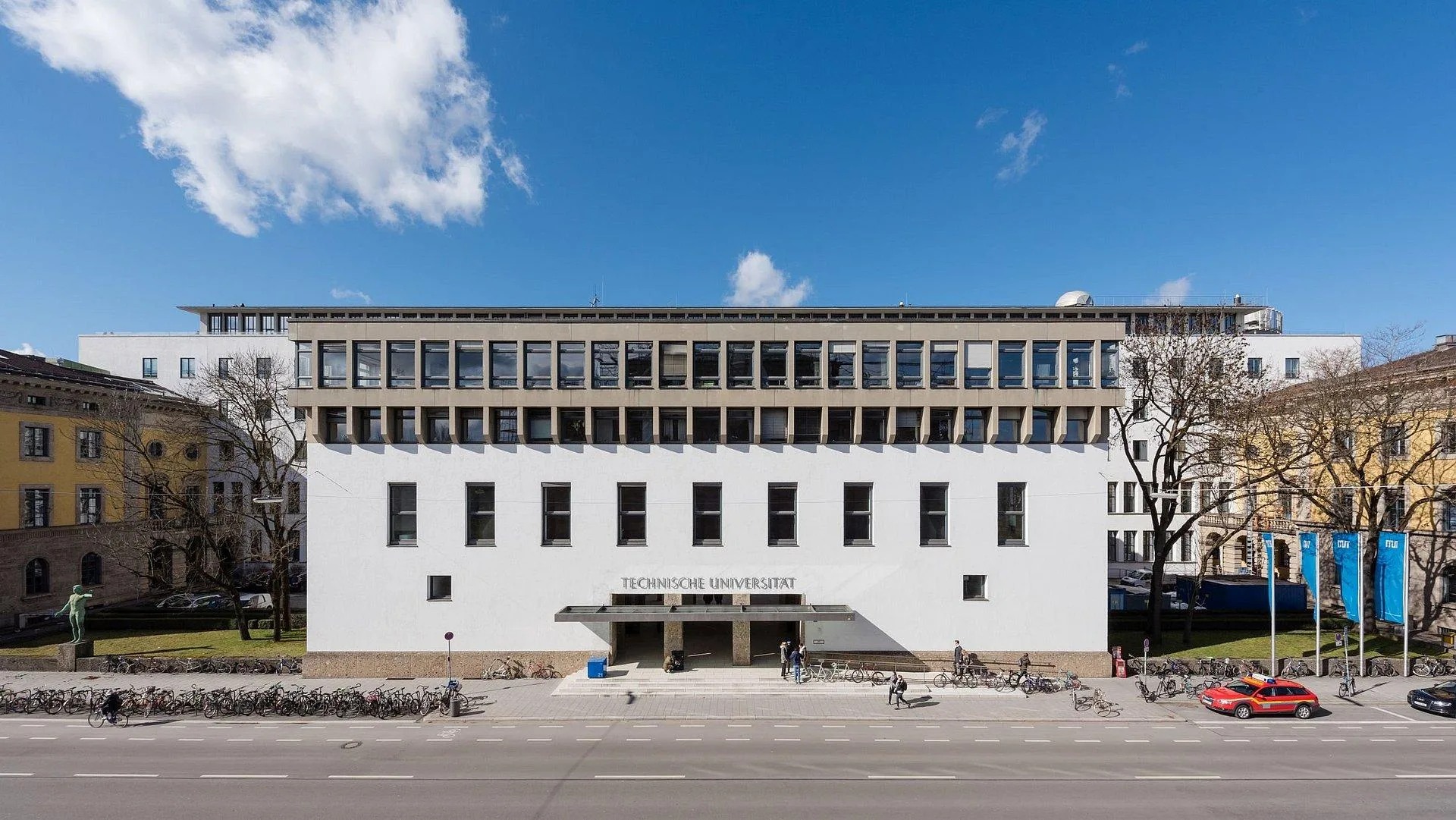
TECHNICAL UNIVERSITY OF MUNICH (TUM)
TUM Main Campus (Stammgelände)

Campus

TUM Main Campus (Stammgelände)

TUM Campus Garching

Campus

TUM Campus Garching

TUM Campus Weihenstephan

Campus

TUM Campus Weihenstephan

ACOLYTE COMMUNITY

800+ Student Housed

NO BROKER FEES·
VERIFIED TECHNICAL UNIVERSITY OF MUNICH (TUM) LISTINGS·
FULLY FURNISHED · BILLS INCLUDED·
£50 PER REFERRAL·
INSTANT SUPPORT·
NO BROKER FEES·
VERIFIED TECHNICAL UNIVERSITY OF MUNICH (TUM) LISTINGS·
FULLY FURNISHED · BILLS INCLUDED·
£50 PER REFERRAL·
INSTANT SUPPORT·

The Cribs

Verified student homes near TECHNICAL UNIVERSITY OF MUNICH (TUM).

🎓
TECHNICAL UNIVERSITY OF MUNICH (TUM)
0/0 shown
Price / week
< £200
£200–£280
> £280

The Lore

Eat & DrinkStudySocial

Indian Restaurants (Schwabing)

10–15 min U-Bahn

Enjoy authentic Indian cuisine in Munich's lively Schwabing district.

Indian Restaurants (Hauptbahnhof Corridor)

5–10 min walk

Numerous Indian restaurants near the central station offering a variety of regional dishes.

Oktoberfest (Theresienwiese)

Sept–Oct · 10 min U-Bahn

Experience the world's largest folk festival with Bavarian beer, food, and traditional culture.

Side Quests

EARN CASH FOR REFERRALS

Refer and earn

Tell a friend — and earn real cash — paid straight to your bank

Refer Now →
ACOLYTE SCHOLARSHIP 2026

£500 scholarship.
50 winners. Every year.

We created the Acolyte Scholarship to give international students — including TECHNICAL UNIVERSITY OF MUNICH (TUM) students — a meaningful head start on the biggest financial challenge of studying abroad: the cost of housing.

  • ✓Open to all nationalities — no restrictions
  • ✓No GPA or grade requirement
  • ✓Must be studying internationally
  • ✓500-word essay — your story, in your words
  • ✓£500 paid directly to your bank account

Student FAQs

Maxvorstadt is the most convenient for the City Campus, while Schwabing and Garching offer popular alternatives depending on which TUM campus your program is primarily based at.

No, TUM does not operate its own residence halls. Students are directed to the Studierendenwerk München Oberbayern, the Munich Student Union, which manages around 10,000 subsidised rooms, though demand is high and waiting times of one to four semesters are common.

Munich International Airport sits roughly 40 kilometres northeast of the city centre, well connected by the S-Bahn S8 and S1 lines, making travel convenient for TUM's large international student population.

Munich's MVV public transport network is extensive and reliable, covering U-Bahn, S-Bahn, tram, and bus routes connecting all major TUM campuses. Students can benefit from the Deutschlandticket, Germany's flat-rate monthly travel pass.

TUM does not publish an official acceptance rate, with third-party estimates commonly citing 8% to 10%, though for many programs admission is criteria-based rather than quota-based, meaning applicants who reach the required point threshold in TUM's aptitude assessment process are admitted regardless of total competitor numbers.

TECHNICAL UNIVERSITY OF MUNICH (TUM)

The Technical University of Munich, known as TUM, was founded in 1868 and has grown into one of Europe's most respected research universities, ranking 22nd globally and first in Germany according to the 2026 QS World University Rankings. With connections to 19 Nobel Prize laureates and alumni including Rudolf Diesel and astronaut Samantha Cristoforetti, TUM has shaped science and engineering in Europe for more than 150 years. Today the university serves more than 52,000 students, of whom 45 percent come from outside Germany, drawn by over 177 degree programs across engineering, natural sciences, medicine, management, and life sciences. For students searching for student accommodation near Technical University of Munich, Munich's competitive housing market makes early planning essential. TUM does not operate its own residence halls, instead directing students to the Studierendenwerk München Oberbayern, the Munich Student Union, which manages around 10,000 subsidised rooms across Munich, Garching, and Freising. Demand significantly exceeds supply, meaning most students end up in private shared apartments, known in Germany as Wohngemeinschaften or WGs, in neighborhoods surrounding the Maxvorstadt city campus or the large Garching research campus. Accommodation near Technical University of Munich is competitive but available across several well-connected suburbs of Bavaria's capital.
TUM operates across multiple campuses in and around Munich. The main City Campus sits in Munich's Maxvorstadt district, the historic university quarter, home to TUM's oldest buildings alongside a dense cluster of museums, galleries, and bookshops. The Garching Research Campus, roughly 15 kilometres north of Munich's city centre, is one of Europe's largest science and technology hubs, housing TUM's schools of engineering, mathematics, physics, chemistry, and informatics alongside the Max Planck Institute for Plasma Physics and several Fraunhofer research institutes. The Klinikum rechts der Isar, TUM's teaching hospital, sits close to the city centre in the Au-Haidhausen neighborhood across the Isar River. The Olympiapark Campus, located within Munich's Olympic Park in the city's north, hosts the Department of Sports and Health Sciences alongside some of the largest sports facilities of any German university. Beyond Munich, TUM runs the TUM School of Life Sciences at Weihenstephan in Freising, a campus in Straubing focused on biotechnology and sustainability, a campus in Heilbronn for digital studies, and a campus in Singapore for management education. Students searching for accommodation near Technical University of Munich typically focus on Maxvorstadt for the city campus or Garching for the engineering and sciences campus.
TUM ranks 22nd globally in the 2026 QS World University Rankings and first in Germany, while placing 27th in the Times Higher Education World University Rankings and within the global top 100 in US News Best Global Universities for Europe. The university is ranked fifth among the best technical universities globally by QS for Engineering and Technology, and sits in the global top 10 in several individual engineering subjects. TUM is connected to 19 Nobel Prize laureates and holds more than 255 European Research Council grants, reflecting its position as one of Europe's most research-intensive universities and the leading institution of its kind in the German-speaking world.
TUM has built its global reputation around engineering excellence, research intensity, and an unusually entrepreneurial culture for a European public university. It is best known for: Germany's number one university: Ranked first nationally by QS and consistently recognised as Germany's leading technical university. Engineering and technology leadership: Among the top five technical universities in the world for engineering, covering aerospace, mechanical, electrical, and civil engineering. Entrepreneurial culture: TUM has produced more startup founders than any other German university, supported by innovation centres and startup incubators embedded directly into academic programs. Nobel Prize connections: 19 Nobel Prize laureates connected to TUM through faculty, alumni, or research activity. The Garching Research Campus: One of Europe's largest science and technology hubs, co-located with Max Planck Institute, Fraunhofer, and Helmholtz research institutes. Artificial intelligence and quantum computing: Major investment and research centers focused on AI, quantum science, and digital transformation. International outlook: 45 percent of TUM students come from outside Germany, with programs offered in both German and English. Rudolf Diesel and Samantha Cristoforetti: Among TUM's most famous alumni, spanning industrial invention, architecture under Walter Gropius, and space exploration.
TUM offers more than 177 degree programs spanning bachelor's, master's, and doctoral levels across schools of engineering, natural sciences, medicine, management, life sciences, and social sciences. The TUM School of Engineering and Design, based primarily at Garching, covers mechanical, civil, electrical, aerospace, and biomedical engineering, with individual programs placing consistently in global top-10 subject rankings. The TUM School of Computation, Information and Technology houses computer science, data science, mathematics, and electrical engineering, with the Informatics program in particular attracting some of TUM's most competitive international applications. TUM's School of Management offers the Master in Management and Technology, combining technical and business education in a program closely tied to Munich's corporate ecosystem of firms like BMW, Siemens, and MAN. The TUM School of Medicine and Health, centred on the Klinikum rechts der Isar, trains physicians and health researchers in close partnership with one of Bavaria's largest teaching hospitals. The School of Life Sciences at Weihenstephan, one of the world's oldest agricultural science sites, covers biotechnology, nutrition, brewing, and environmental sciences. Many TUM programs are available in English at master's level, making them accessible to students who do not speak German. Students choosing accommodation near Technical University of Munich typically weigh proximity to the Maxvorstadt city campus against the larger Garching research campus depending on their school.
TUM's library system spans multiple campuses, with the main collection housed at the City Campus in Maxvorstadt and significant dedicated libraries serving Garching and Weihenstephan. The libraries provide access to extensive academic databases, scientific journals, and print collections supporting TUM's strong research profile across engineering, natural sciences, and management. Across campuses, students benefit from study spaces, digital resource access, and research support services. TUM's library holdings reflect the university's particular strength in STEM disciplines, with specialist collections in areas including engineering design, computational science, and life sciences research. The system is accessible to all enrolled students regardless of which TUM campus their program is primarily based at.
TUM does not operate its own student residence halls, instead directing students to the Studierendenwerk München Oberbayern, the Munich Student Union, which provides around 10,000 subsidised rooms and apartments across Munich, Garching, Freising, and Rosenheim. These places are in extremely high demand, with waiting times of one to four semesters depending on the dormitory and location, making early application immediately upon receiving an admission letter essential. Students are strongly advised by TUM itself to begin their housing search as early as possible. Most students end up in private shared apartments known as Wohngemeinschaften or WGs, which represent the dominant and most cost-effective form of accommodation near Technical University of Munich, combining affordability with the social benefits of shared living.
TUM's facilities are distributed across its multi-campus network, each reflecting the specific academic focus of that location. The Garching Research Campus, one of Europe's largest science and technology hubs, provides engineering and science students with access to state-of-the-art laboratories, research institutes, and shared facilities with Max Planck, Fraunhofer, and Helmholtz research organizations directly on site. The Olympiapark Campus houses some of the largest sports facilities of any German university, reflecting TUM's strength in sports and health sciences and giving students access to extensive recreational and athletic resources. The Klinikum rechts der Isar provides medical students with a fully equipped teaching hospital environment. Across TUM's campuses, students benefit from Mensa cafeterias operated by the Studierendenwerk, offering subsidised hot meals throughout the semester, along with student council offices, quiet study spaces, and community notice boards where private housing offers are regularly posted. TUM's innovation ecosystem includes the Munich Institute for Entrepreneurship and Management and multiple startup incubators, giving entrepreneurially minded students direct pathways from research to commercial application. Career services and an international student support office, TUM Global and Alumni, provide tailored guidance for the university's large international community.
Munich benefits from one of Germany's most reliable and comprehensive public transport networks, managed by the Münchner Verkehrsgesellschaft, commonly called the MVV, covering U-Bahn underground lines, S-Bahn suburban rail, trams, and buses. TUM's Maxvorstadt campus is directly connected to Munich's city centre, with U-Bahn stations within walking distance and S-Bahn connections across the broader region. The Garching Research Campus is reached by the U6 U-Bahn line, extending to Garching-Hochbrück station just 15 minutes from central Munich, making it well connected despite its suburban location. Munich International Airport, one of Europe's busiest, sits roughly 40 kilometres northeast of the city centre, well connected by the S-Bahn S8 and S1 lines. Students can benefit from the Bayern Ticket, a regional day pass, or the Deutschlandticket, Germany's flat-rate monthly travel pass covering all local and regional public transport nationwide for a fixed monthly fee, representing exceptional value for daily commuting. Many properties offering accommodation near Technical University of Munich in Maxvorstadt, Schwabing, or Garching sit within direct U-Bahn or S-Bahn distance of all major TUM campuses, making car ownership largely unnecessary for most students in Munich.
Students searching for accommodation near Technical University of Munich tend to settle into a handful of neighborhoods depending on which campus they attend most. Maxvorstadt, the university quarter directly surrounding the City Campus, is the first choice for students whose programs are based downtown, offering cafes, bookshops, study spaces, and walking distance to TUM's oldest buildings, though rents here sit among Munich's higher tiers. Schwabing, bordering Maxvorstadt to the north and stretching up toward the Englischer Garten, offers a lively, cosmopolitan atmosphere popular with students and young professionals, with excellent U-Bahn access to both the city campus and Garching. Garching, the town immediately surrounding TUM's research campus, suits engineering and science students who want to minimize their commute, with Studierendenwerk dormitories on site and a quieter, more suburban character than central Munich. Moosach and Schwabing-West, popular among students attending the Olympiapark Campus, offer more affordable rents than central Maxvorstadt while remaining well connected. Sendling and Neuhausen-Nymphenburg, further west, provide good value relative to the city center with solid U-Bahn and tram connections for students willing to commute a little further each day.
Munich is one of the most expensive cities in Germany for renting, and students should budget carefully. Here's a general breakdown of costs for accommodation near Technical University of Munich: Studierendenwerk dormitories: Subsidised rooms managed by the Munich Student Union typically cost between roughly EUR 250 and EUR 600 per month, among the most affordable options available, though waiting times of one to four semesters make them hard to secure immediately. Freising and Weihenstephan dormitories: Even more affordable, with rooms reported at around EUR 300 per month, though located further from Munich proper. Shared apartments (WGs): The most common student option, with rooms in a shared apartment in central Munich typically ranging from EUR 500 to EUR 900 per month. Private studios: Generally range from EUR 1,100 to EUR 1,600 or more per month for a private studio in central neighborhoods like Maxvorstadt or Schwabing. Purpose-built student accommodation: Providers like THE FIZZ Munich offer all-inclusive furnished rooms, generally priced toward the higher end of the WG range or above. Garching housing: Generally more affordable than Munich proper for comparable accommodation. Additional costs: Students should budget separately for health insurance and a blocked account of around EUR 11,904 per year, required to demonstrate financial means when applying for a student visa.
Since TUM does not operate its own residence halls, the comparison is effectively between Studierendenwerk subsidised dormitories, if a place can be secured, and private WG shared apartments in the open market. Studierendenwerk rooms at EUR 250 to EUR 600 per month are significantly cheaper than private WG rooms in central Munich, making them the most cost-effective option when available. For students who cannot secure a subsidised dormitory place, sharing a WG in a neighborhood like Schwabing or Moosach rather than renting a private studio delivers meaningfully lower costs. Private studios in Munich's central areas represent the most expensive accommodation near Technical University of Munich and are generally impractical for budget-conscious students.
Munich and its surroundings offer an exceptional range of attractions within easy reach of TUM's campuses. The Englischer Garten, one of the world's largest urban parks, sits directly beside the Maxvorstadt campus, offering green space, beer gardens, and the famous Eisbach river wave where surfers ride year-round. Marienplatz, Munich's historic central square and home to the famous Glockenspiel, sits a short U-Bahn ride from campus. The Deutsches Museum, the world's largest science and technology museum, sits on an island in the Isar River and is practically a natural extension of TUM's academic culture. Viktualienmarkt, Munich's beloved daily outdoor food market, offers fresh produce and regional specialties in the city's historic core. Finally, Schloss Nymphenburg, the baroque summer palace on Munich's western edge, offers stunning gardens and architecture, making it an easy and popular outing from accommodation near Technical University of Munich.

University Acceptance Rate by Technical University of Munich

ProgrammeEstimated Acceptance RateTypical GPA / Test Score
Overall (All Applicants, Unofficial)TUM does not publish an official rate; third-party estimates commonly cite 8% to 10%, though these may reflect international applicants to specific programs rather than all applicants globallyVaries significantly by program and applicant background
Undergraduate Programs (Domestic)Many of TUM's 114 admission-free programs accept all qualified applicants who meet formal requirements; NC-restricted programs depend on Abitur grade point averageGerman Abitur or equivalent; competitive NC programs typically require GPA around 1.0 to 2.0 on Germany's 1.0 to 6.0 scale
Master's Programs via Aptitude Assessment (EFV)Criteria-based rather than quota-based for many programs; applicants who reach the required point threshold are admitted regardless of how many others applyBachelor's degree with minimum GPA around 2.0 (German scale) to 2.5; subject alignment and motivation assessed in two-stage EFV process
Computer Science and Data Science (Master's)Among the most competitive programs at TUM; CS admission rates often estimated below 15%Strong academic record; CGPA around 8.5 or above on a 10-point scale recommended; GRE may be required
Management and Technology (Master's)More accessible than pure STEM programs, though still competitiveLower minimum GPA accepted, but strong motivation and professional alignment expected
International ApplicantsAdditional requirements apply; APS Certificate mandatory for Indian applicants (4-5 months processing); uni-assist preliminary documentation required for many nationalitiesIELTS 6.5 / TOEFL iBT 88 for English-taught programs; TestDaF 4x4 or DSH-2 (C1) for German-taught programs
Student Accommodation Near TECHNICAL UNIVERSITY OF MUNICH (TUM) | Acolyte Living

The Cribs

Verified student homes near TECHNICAL UNIVERSITY OF MUNICH (TUM).