Two of the most common accommodation options for students are purpose-built student accommodation (PBSA) and private rentals. On the surface, both give you a place to sleep near campus. But the experience, the cost structure, the obligations, and the lifestyle they offer are quite different.
If you are trying to decide between the two, understanding what each actually involves will help you make a choice that fits your priorities, not just your budget.


London City properties
Find your perfect student accommodation
What Is PBSA?
Purpose-built student accommodation is a residential building developed and managed specifically for students. These are not converted houses or general apartment blocks rented to a mix of tenants. They are purpose-designed buildings where every resident is a student, with room types, communal spaces, and on-site services designed around student life.
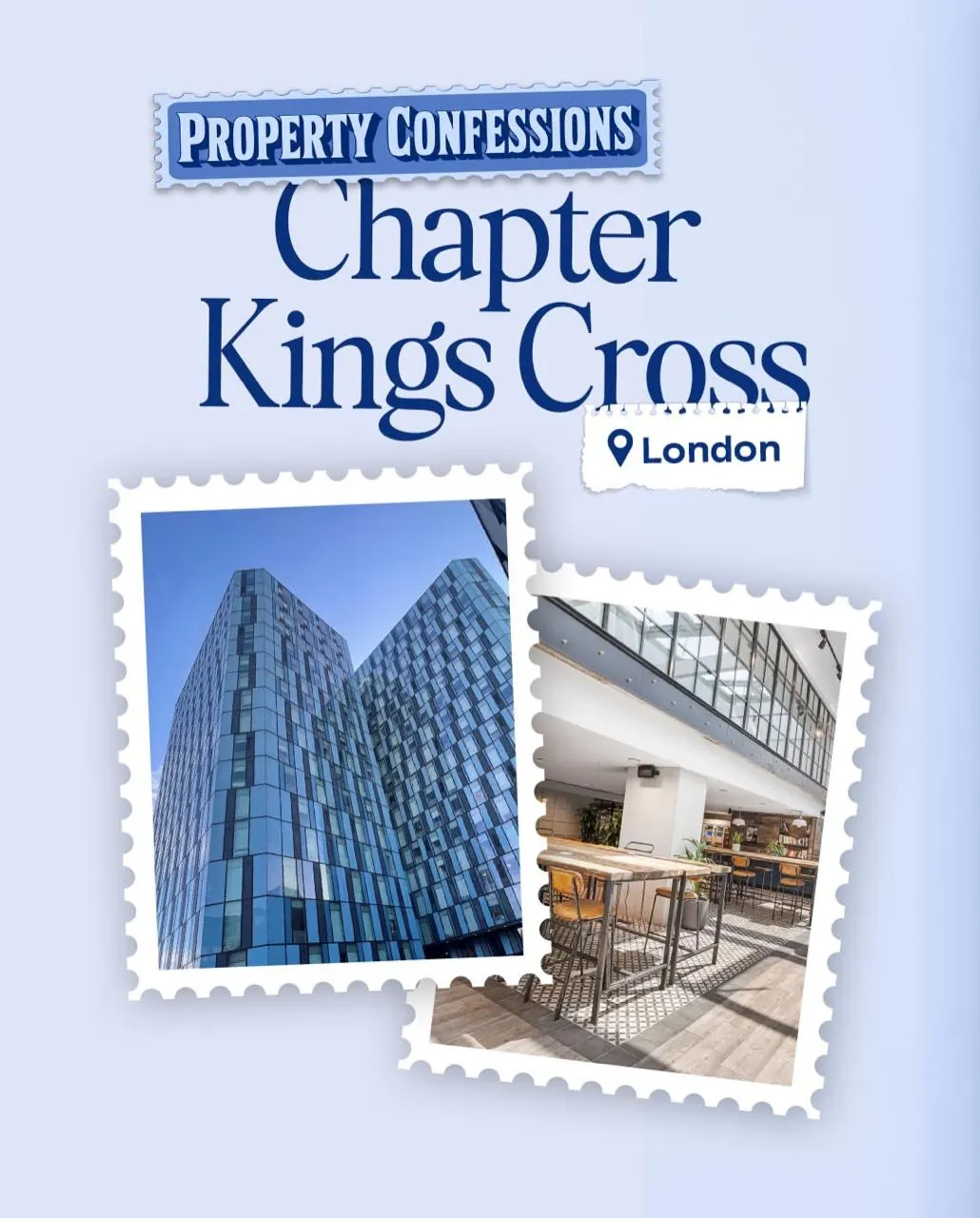
Major PBSA operators in the UK include Unite Students, iQ Student Accommodation, Scape, Chapter, and Vita Student. In Australia, providers such as Scape, Iglu, and UniLodge operate similar buildings. PBSA is also growing rapidly in Ireland, Germany, the Netherlands, and Singapore.
A standard PBSA room includes a furnished private bedroom, a private or shared en-suite bathroom, a study desk, and access to communal facilities, typically a gym, co-working spaces, a laundry room, and social common areas. All-inclusive weekly pricing covering utilities and broadband is standard.
What Is a Private Rental?
A private rental is a room or property leased from a private landlord or letting agency rather than from a student-specialist operator. For students, this usually means renting a room in a shared house or flat alongside other students or young professionals, with each tenant paying rent to the landlord and splitting utility bills between themselves.
Private rentals are found through platforms like Rightmove and Zoopla in the UK, Daft.ie in Ireland, Domain in Australia, or WG-Gesucht in Germany. The letting market is not student-specific, and you are competing for properties with the general rental population.
Cost: All-In vs Headline Rent
The most important cost difference between PBSA and private rentals is not the weekly or monthly rate; it is what is included in that rate.
PBSA pricing is almost always all-inclusive. Your quoted weekly figure covers your room, utilities, internet, building amenities, and contents insurance in most cases. There are no additional bills to manage.
Private rental pricing is almost always exclusive of bills. The room rate you see advertised does not include electricity, gas, internet, or council tax (where applicable). In the UK, adding utility costs to a private rental typically adds £20 to £50 per week per person to the true cost of living in the property.
When you compare the real all-in cost rather than the headline figures, the gap between PBSA and private renting frequently narrows significantly.
PBSA vs Private Rental: Side-by-Side Comparison
| Factor | PBSA | Private Rental |
| All-inclusive pricing | Yes | Rarely |
| Utility bills | Included | Split between housemates |
| Guarantor required | Rarely (deposit alternative) | Usually yes |
| Contract length | Fixed (typically 40–51 weeks) | More flexible (6–12 months) |
| Furnishing | Fully Furnished | Often unfurnished |
| On-site support | Yes (resident team) | No |
| Communal amenities | Gym, co-working, common rooms | Typically none |
| Student-only community | Yes | No (mixed tenants) |
| Flexibility to leave early | Limited (penalty clauses apply) | Subject to break clause |
What PBSA Does Better
PBSA removes almost all the administrative friction associated with student housing. There is no need to set up utility accounts, arrange broadband, chase housemates for bill payments, or deal with a private landlord who may or may not be responsive. If something breaks in the room, you contact the building's maintenance team. If there is a noise issue, there is on-site staff to address it.
For international students arriving in a new country without a local guarantor, PBSA is often the only immediately accessible housing option. Most PBSA buildings accept deposits in place of a guarantor, and the booking process is fully manageable from overseas.
The all-student community in PBSA also makes it easier to meet people quickly, which is particularly valuable for students arriving alone in a city where they know nobody.
What Private Rentals Do Better
The most obvious advantage of private renting is cost. In most student cities, renting a room in a shared house is genuinely cheaper than an equivalent PBSA room when you factor in lifestyle value rather than just raw per-week cost. For students who have already built a social network and know who they want to live with, the communal PBSA environment is less of a draw.
Private rentals also offer more flexibility in room type, location, and house character. You can find a Victorian terrace near your university in Leeds, a modern flat in a converted warehouse in Manchester, or a quiet house on a residential street in Edinburgh that PBSA simply cannot replicate.
Cooking is also a more meaningful part of the private rental experience. Most PBSA buildings have small communal kitchens or basic in-room cooking facilities that are practical but limited. A shared private house with a full kitchen gives you far more cooking flexibility, which matters for students with specific dietary preferences or cultural food traditions.
Tips for Choosing Between PBSA and Private Rental
- For your first year, PBSA is almost always the lower-friction choice. You will have enough to adjust to without also managing utility accounts, tracking down housemates for bill payments, and dealing with a private landlord independently.
- For the second year and beyond, shared private rental often makes financial and social sense. You know people, you know the city, and you can find a good property with friends rather than accepting allocated flatmates.
- Always calculate the true all-in cost before comparing. Add estimated utilities and internet to any private rental quote before comparing it to a PBSA rate.
- International students should check guarantor requirements early. If you do not have a UK or local guarantor, PBSA is the clearest route. Do not rely on finding a flexible private landlord as your only plan.
Frequently Asked Questions
What is the difference between PBSA and private rental student housing?
PBSA is purpose-designed student housing managed by a specialist operator, with all-inclusive pricing, on-site staff, and amenities. A private rental is a room or property leased from a private landlord, with bills managed separately and no student-specific infrastructure.
Is PBSA more expensive than private renting?
PBSA's headline weekly rate is typically higher than a private room's advertised rent, but PBSA includes utilities, internet, and amenities. When these are added to the private rental cost, the real all-in difference is usually smaller than it first appears and sometimes negligible.
Do PBSA buildings require a guarantor?
Most PBSA buildings do not require a local guarantor. They typically offer alternatives such as paying a security deposit or advance rent. Private landlords in most countries do require a guarantor or proof of income.
Can I cook my own food in PBSA accommodation?
Most PBSA buildings have shared kitchen facilities within flat clusters or communal areas. These are functional for everyday cooking but are generally more basic than the full kitchen you would have in a shared private house. If cooking is a priority, check the kitchen facilities at any PBSA building before booking.
Which is better for international students, PBSA or private rental?
For newly arrived international students, PBSA is generally the better first-year option due to its all-inclusive pricing, no-guarantor arrangements, on-site support, and student community. Private rental becomes more practical and more cost-effective as students become familiar with the local market and build a social network.
Wassup
Instagram??







Key Takeaways
- PBSA is purpose-designed student housing with all-inclusive pricing, on-site support, and student-only communities. Private rentals are general market properties leased from private landlords with bills managed separately.
- The true cost difference between the two is smaller than headline rents suggest once utilities and internet are added to private rental costs.
- PBSA is better for first-year and international students due to simpler setup, no guarantor requirements, and built-in community.
- Private rental offers more lifestyle flexibility, better cooking facilities, and is often more cost-effective for returning students with an established social group.
- International students without a local guarantor should prioritize PBSA as their first-year housing plan.