The UCAS application form is the same for international and UK students. The deadlines are the same. The five-choice limit is the same. The personal statement format, three structured questions with a total of 4,000 characters, is the same.
What is different is the surrounding process: qualifying home-country grades against UK entry requirements, meeting English language conditions that appear as offer conditions rather than application requirements, applying for a UK Student Visa after accepting your place, and managing all of this from outside the country, sometimes under the time pressure of Clearing.


london City properties
Find your perfect student accommodation
Does UCAS accept international students?
Yes. Over 100,000 international students apply to UK universities through UCAS each year. The application is submitted online through ucas.com. Everything from registration to tracking offer decisions happens through the UCAS Hub. You do not need to be in the UK or apply through a UK school.
UCAS deadlines for international students
The deadlines are identical to UK applicants:
| Deadline | Date | Who it applies to |
| Oxbridge, Medicine, Dentistry, Veterinary | 15 October 2025 | All applicants including international |
| Main UCAS deadline | 14 January 2026 | All international undergraduate applicants |
| Clearing opens | 5 July 2026 | All applicants without a confirmed place |
| A-level results day | 13 August 2026 | Results published; Hub updates |
| Clearing closes | 19 October 2026 | All applicants |
One practical point: if your referee is a teacher at your school in India, Nigeria, or South Korea, agree on a timeline months before the UCAS cutoff. Coordinating across time zones adds real lead time that many students underestimate.
How international qualifications are assessed
UK universities assess international qualifications against the equivalent UK grade. Each university's admissions team makes this assessment individually, not UCAS centrally.
| Qualification | How UK universities typically assess it |
| Indian Class 12 (CBSE or ISC) | Assessed as roughly equivalent to A-levels; specific grade bands vary by university |
| Indian Class 12 (state boards) | Assessed case by case; some universities require higher overall scores |
| International Baccalaureate | Directly assessed; universities state an IB points requirement |
| US High School Diploma with SAT or ACT | Assessed together; course pages state specific score requirements |
| A-levels taken outside the UK | Same equivalency as UK A-levels |
| Foundation year completion | Many UK universities accept specific foundation routes designed as UCAS entry pathways |
The most reliable approach is to go to the specific university's international entry requirements page, not the general UCAS points table. Some accept lower overall scores with strong subject-specific grades. Others have firm minimums across all subjects. If your qualification is not listed on a university's international entry page, email their admissions office directly before applying.
English language requirements
Most UK universities require international applicants from non-English-medium educational backgrounds to demonstrate English language proficiency. This typically appears as a condition of the offer.
| Course type | Typical IELTS overall | Typical minimum per component |
| Business, Humanities, Social Sciences | 6.0 to 6.5 | 6.0 |
| Engineering, Computer Science | 6.0 to 6.5 | 5.5 to 6.0 |
| Law | 6.5 to 7.0 | 6.5 |
| Medicine | 7.0 to 7.5 | 7.0 |
| Nursing | 7.0 | 7.0 |
These are typical ranges. Check the exact requirement on each university's course page. Some universities also accept TOEFL, Cambridge English, or Pearson PTE Academic as alternatives.
If you completed your final two years of secondary education entirely in English, some universities waive the language test requirement. Indian students from CBSE or ISC English-medium schools should check with each university individually, as policies differ.
The UCAS personal statement for international applicants
The personal statement format and expectations are identical. All three questions apply. For question 2, if your qualification is unlikely to be familiar to the admissions tutor, explain it briefly: which board you studied with, which subjects you specialised in, what those subjects involved. One or two sentences is enough. The rest of question 2 should focus on what you learned and how it connects to the course.
The full breakdown of how to write all three questions: UCAS Personal Statement 2026.
After you accept an offer: the UK Student Visa
Once you accept a firm offer through UCAS, the university issues a CAS (Confirmation of Acceptance for Studies). This is a unique reference number assigned to your course and institution. You use it to apply for a UK Student Visa.
| Requirement | Detail |
| Who needs it | Students from outside the UK who are not settled residents |
| When to apply | As soon as you receive your CAS |
| Processing time | Approximately 3 weeks from most countries |
| Application fee | £490 outside the UK |
| Healthcare surcharge | £470 per year of study (paid alongside the visa fee) |
| Financial evidence required | First-year tuition plus £1,334 per month in London or £1,023 per month elsewhere, held for 28 consecutive days |
The 28-day financial evidence requirement is strict. Bank statements must show funds held consistently for 28 consecutive days ending no more than 31 days before your visa application. Student loans from your home country do not typically count unless the funds are already in your bank account. Arrange your financial documentation early.
Clearing and the visa problem
International students who end up in Clearing face a compressed timeline that UK students do not. If you accept a Clearing place on 13 August 2026, you need to:
- Receive a CAS from the university
- Submit your UK Student Visa application
- Wait for the visa to be processed (approximately three weeks)
- Travel to the UK
- Arrive before the university's latest enrolment date
Some universities have enrolment cutoffs in mid-September for courses starting in late September. This sequence is achievable from August but only if every step moves without delay. Accepting a Clearing offer in October may make it impossible to start in the same academic year.
If you are an international student going through Clearing, phone universities early in the window and confirm their latest arrival date for international students before accepting any offer. For the full Clearing process explained: UCAS Clearing Guide 2026.
Notes specifically for Indian students
India sends one of the largest groups of international students to UK universities each year. A few specifics:
Qualifications. CBSE, ISC, and state board Class 12 results are all accepted by UK universities but assessed differently. ISC typically has a stronger equivalency profile than state boards at more selective universities. IB taken through an Indian IB school is assessed the same as anywhere else.
IELTS. Most courses require IELTS 6.0 to 7.0 depending on the subject. Students from English-medium schools should contact universities directly to ask about waivers rather than assuming they apply automatically.
Applying to both UK and US universities. Many Indian students apply to both systems in the same cycle. The UCAS personal statement and the Common App essay have completely different requirements and cannot be repurposed for each other. The October deadlines for both systems fall within weeks of each other. Full comparison: UCAS vs Common App.
Accommodation for international students
Most UK universities guarantee accommodation for first-year international students who apply by the university's accommodation deadline, typically in June or July. Students coming through Clearing in August almost always miss this guarantee because halls are already full.
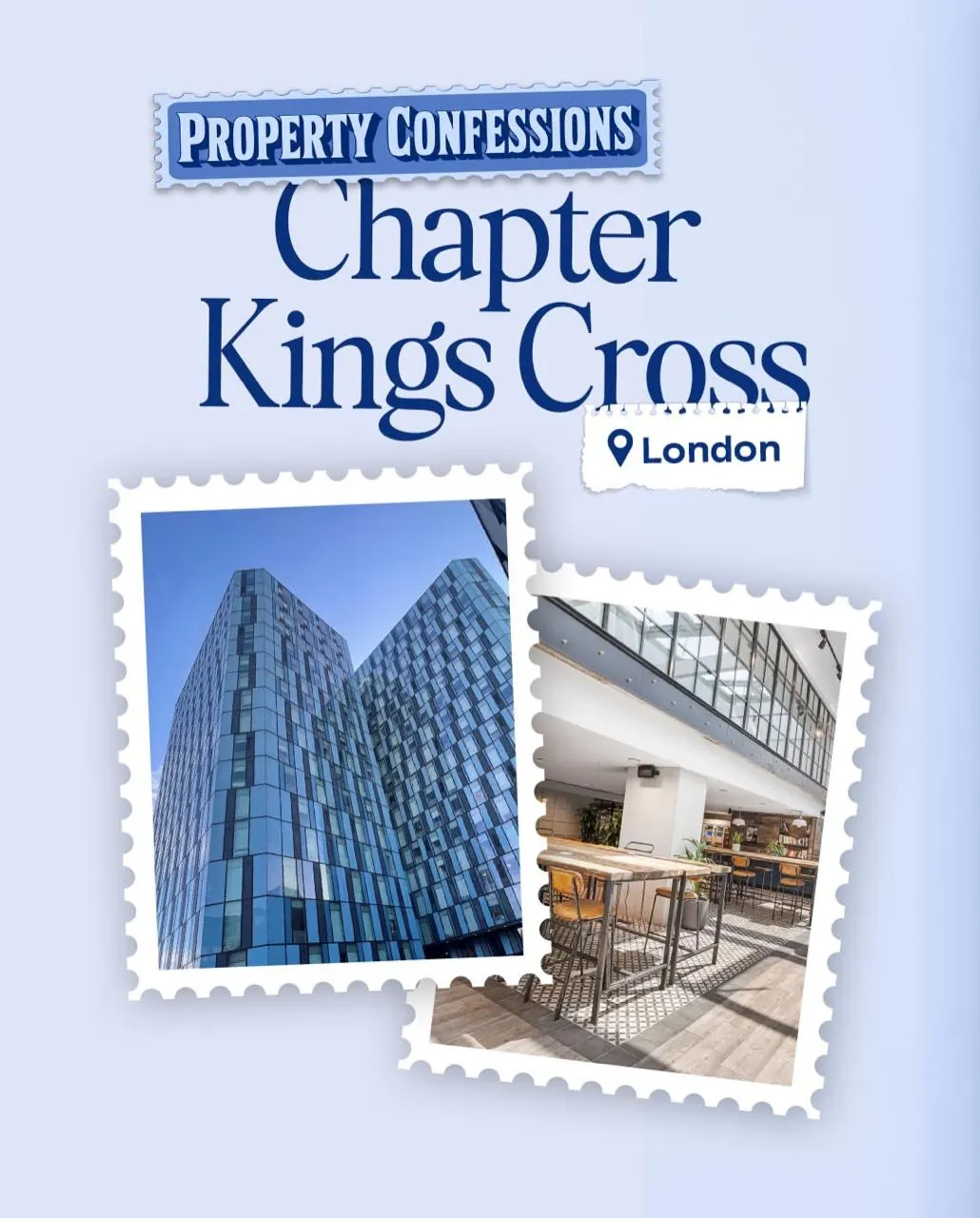
If you are an international student booking accommodation remotely, having verified listings matters. Acolyte Living covers purpose-built student accommodation across London, Manchester, Birmingham, Leeds, Sheffield, Edinburgh, and more. All properties pass ownership verification and physical inspection before being listed. Browse options near your university at Acolyte Living.
Wassup
Instagram??






FAQs
Can international students apply through UCAS?
Yes. UCAS accepts applications from students worldwide. The process and deadlines are the same as for UK students.
Do international students follow the same UCAS deadlines?
Yes. The main deadline is 14 January 2026. Oxford, Cambridge, Medicine, Dentistry, and Veterinary Science have an earlier deadline of 15 October 2025.
What English language score do I need?
IELTS 6.0 to 6.5 covers most non-language courses. Medicine and Law typically require 7.0 or higher. Check each university's specific course page.
When does the university send my CAS?
Once you have accepted a firm offer and met any outstanding conditions. For conditional offers this happens after results are confirmed.
How long does the UK Student Visa take?
Approximately three weeks from most countries. Check the current estimate for your country on the UK Visas and Immigration website before applying.
Can I use Clearing as an international student?
Yes, but visa timing is a real constraint. Late Clearing offers in September or October may not leave enough time to get a visa before the university's enrolment deadline.
Is accommodation guaranteed for international students?
Many universities guarantee first-year accommodation for international students who apply by their deadline. Clearing students often miss this guarantee. Purpose-built student accommodation stays available longer.